1942– · @artistahuichol
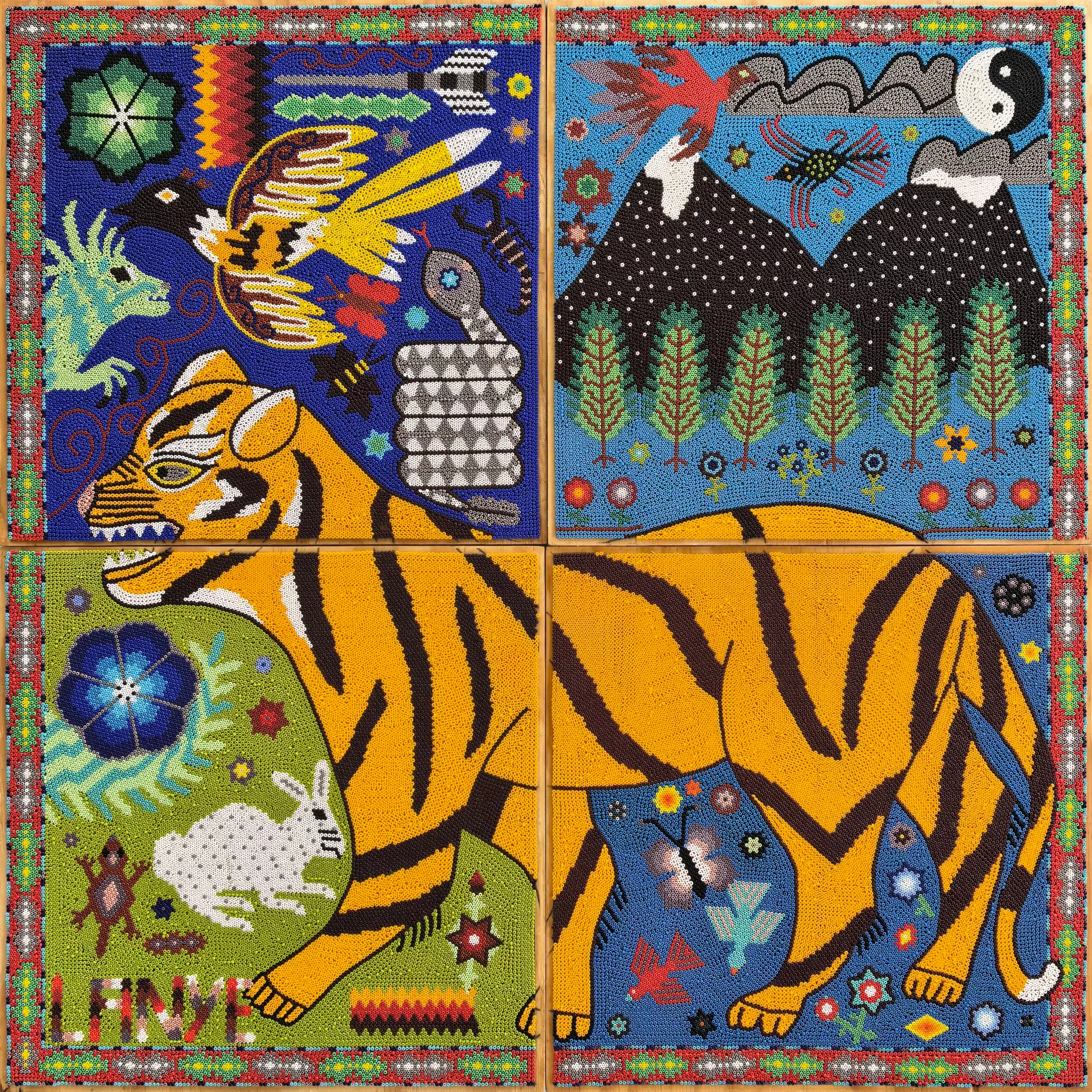
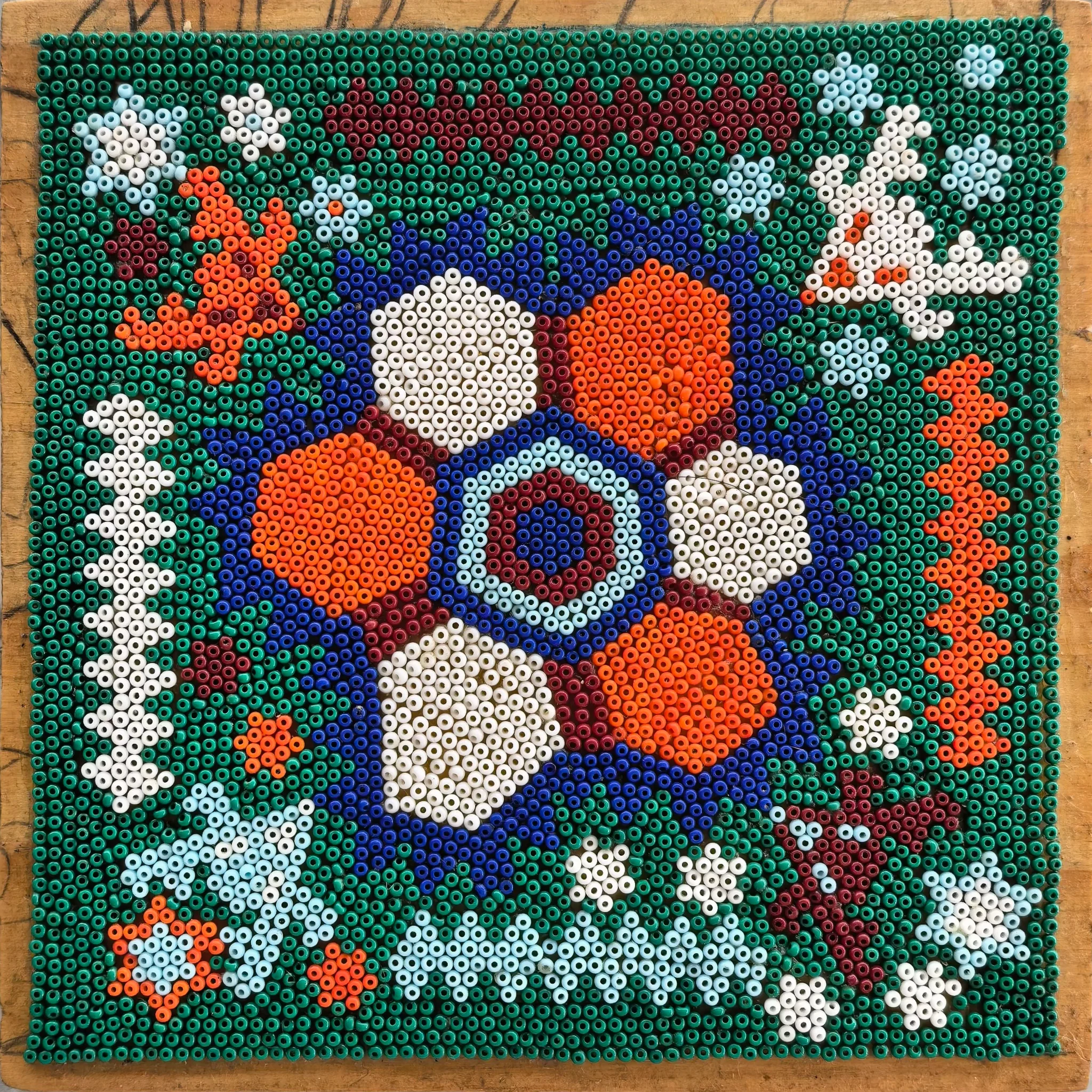
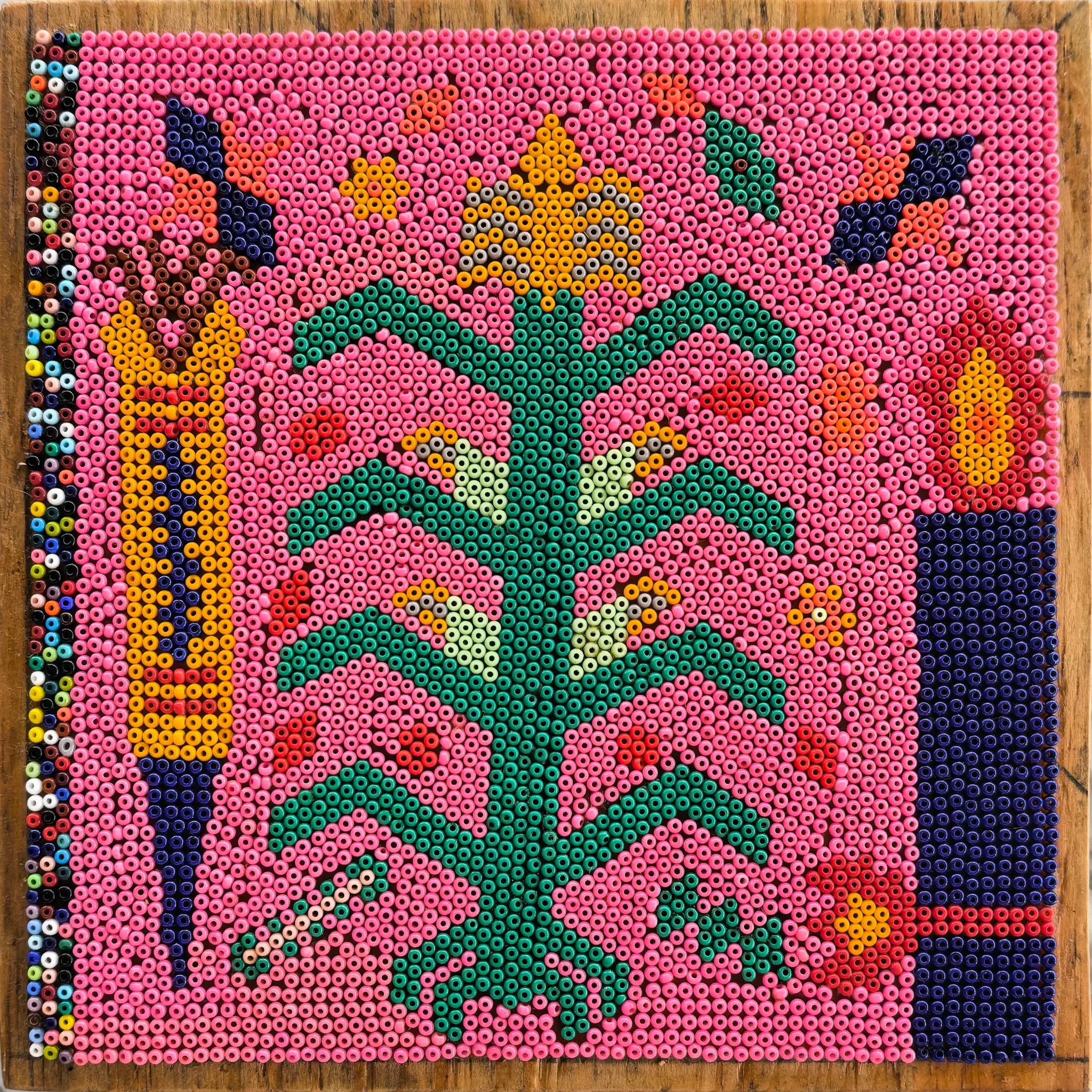
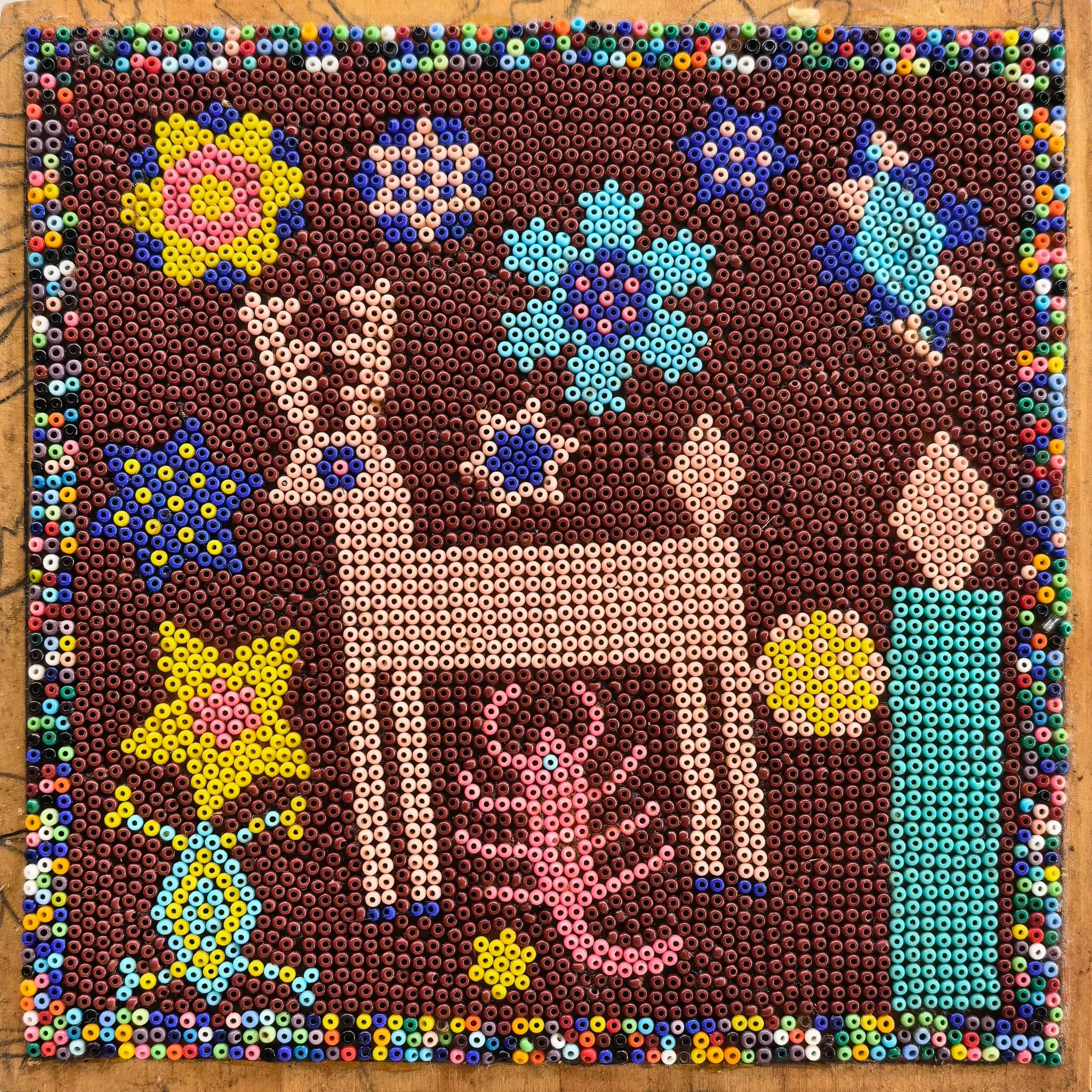
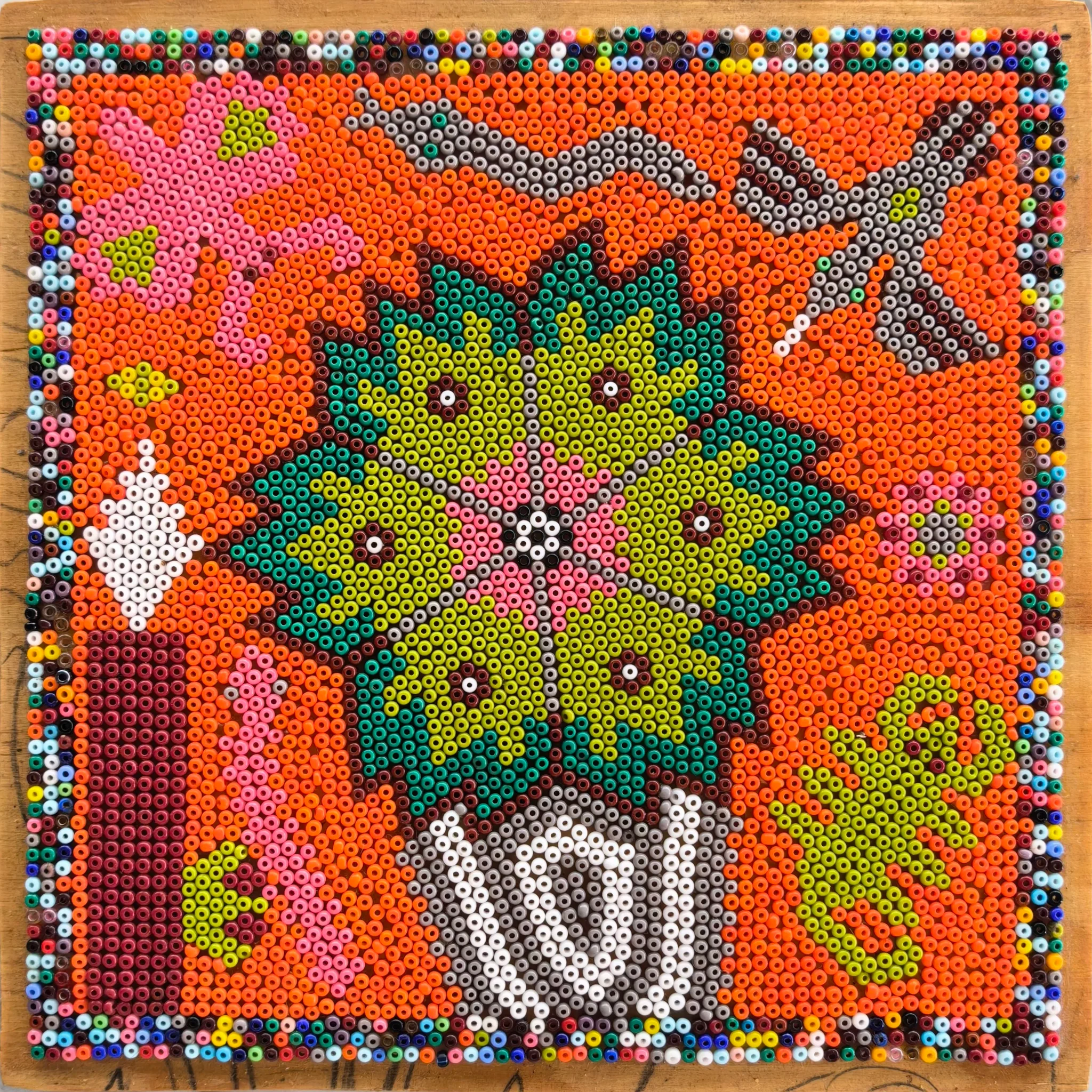
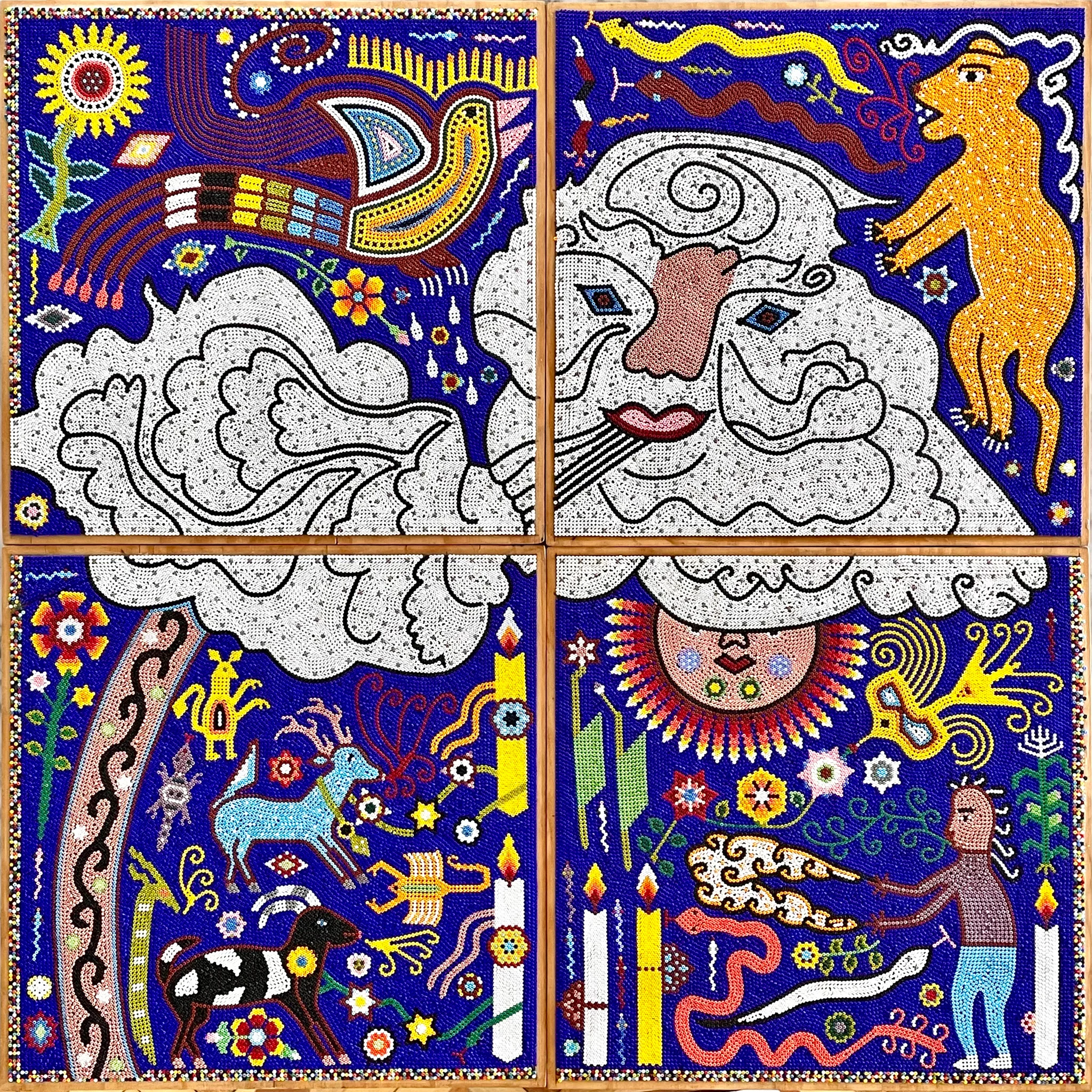
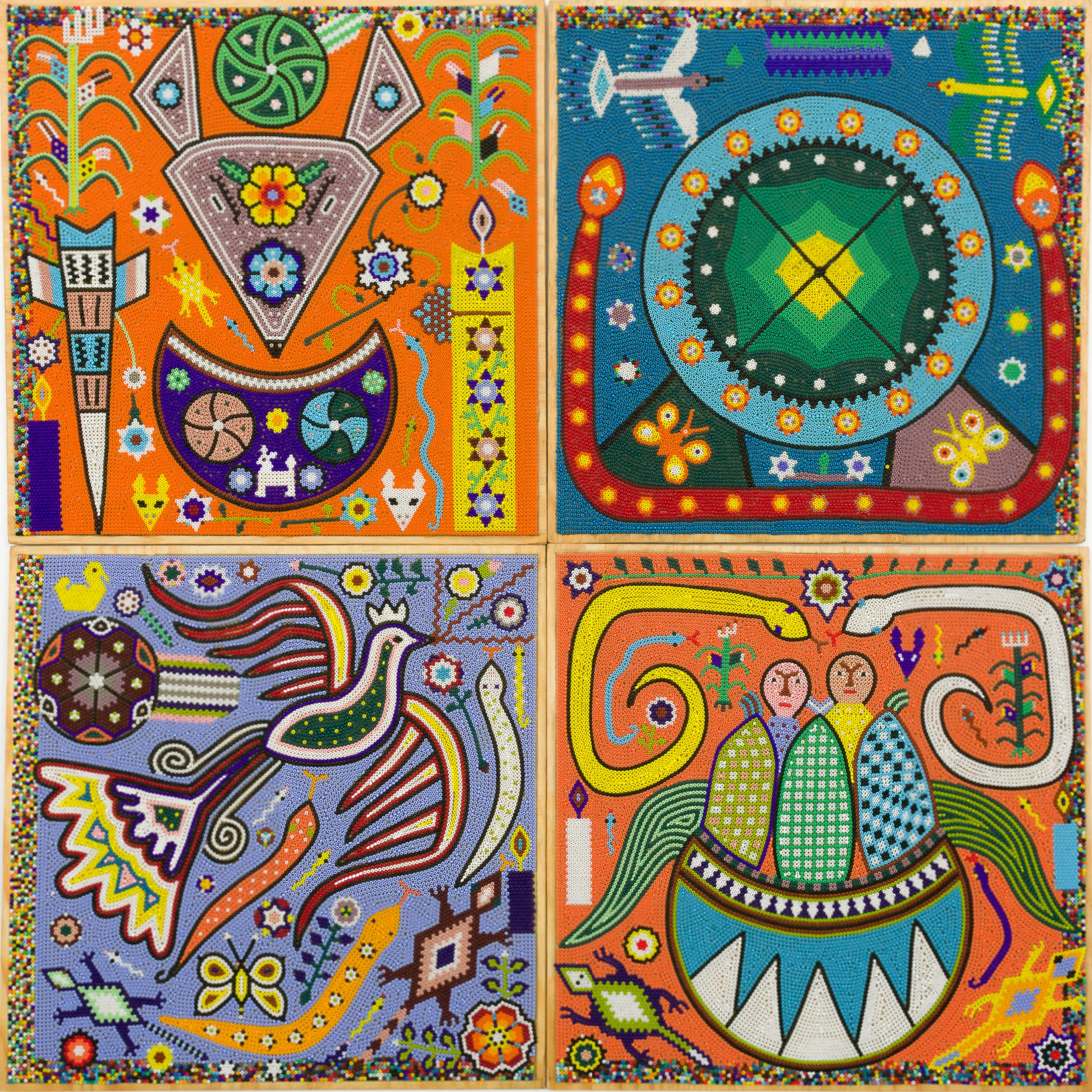
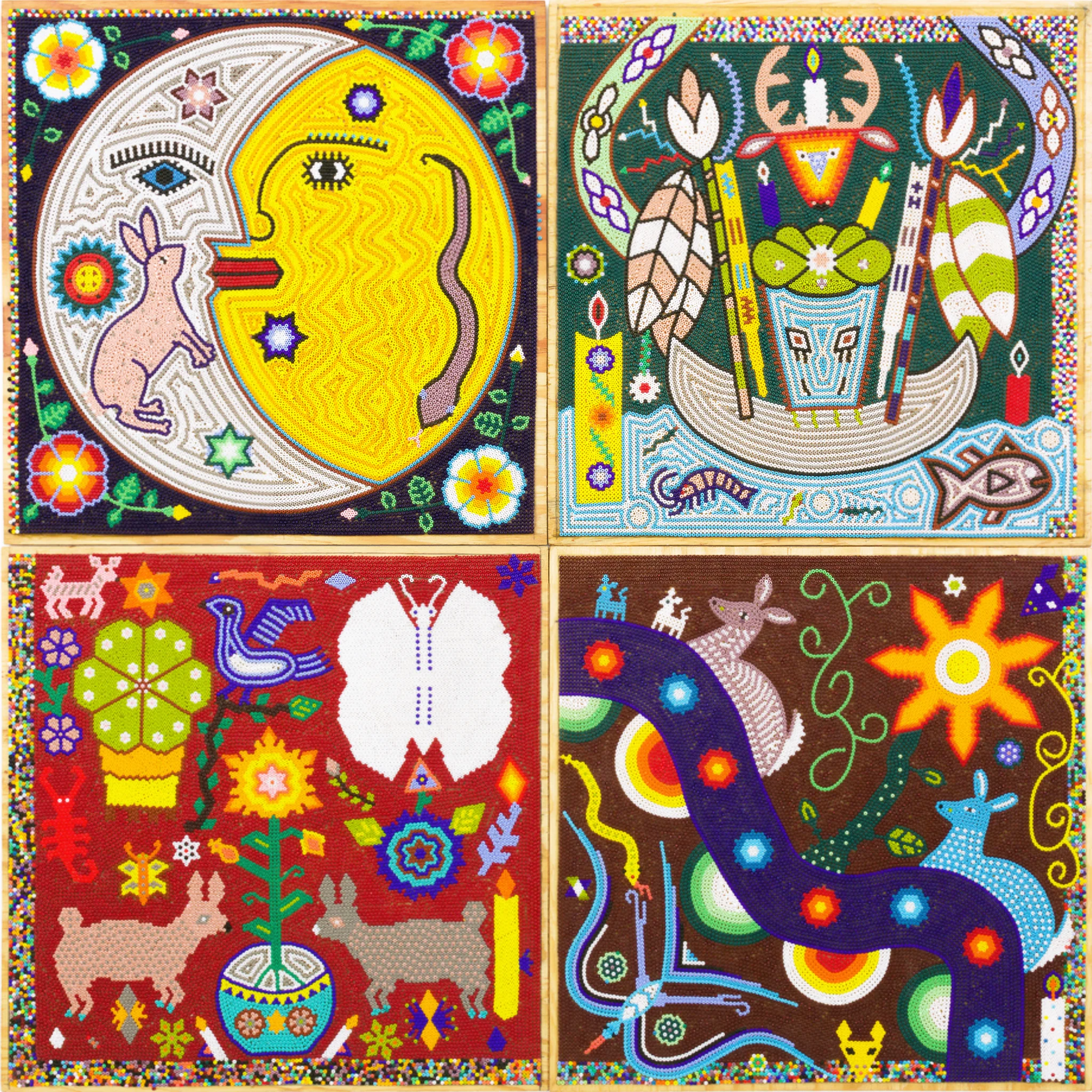
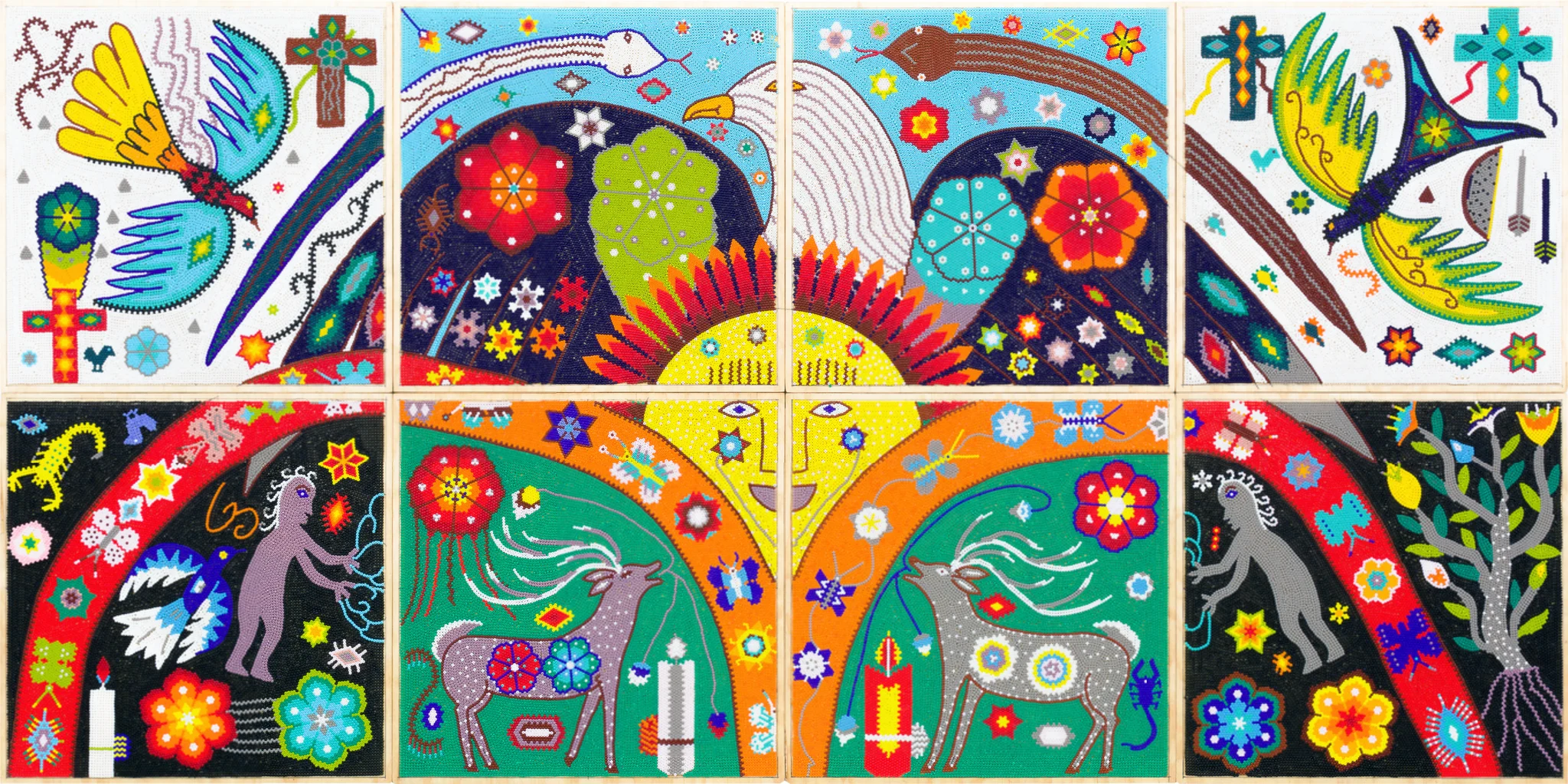
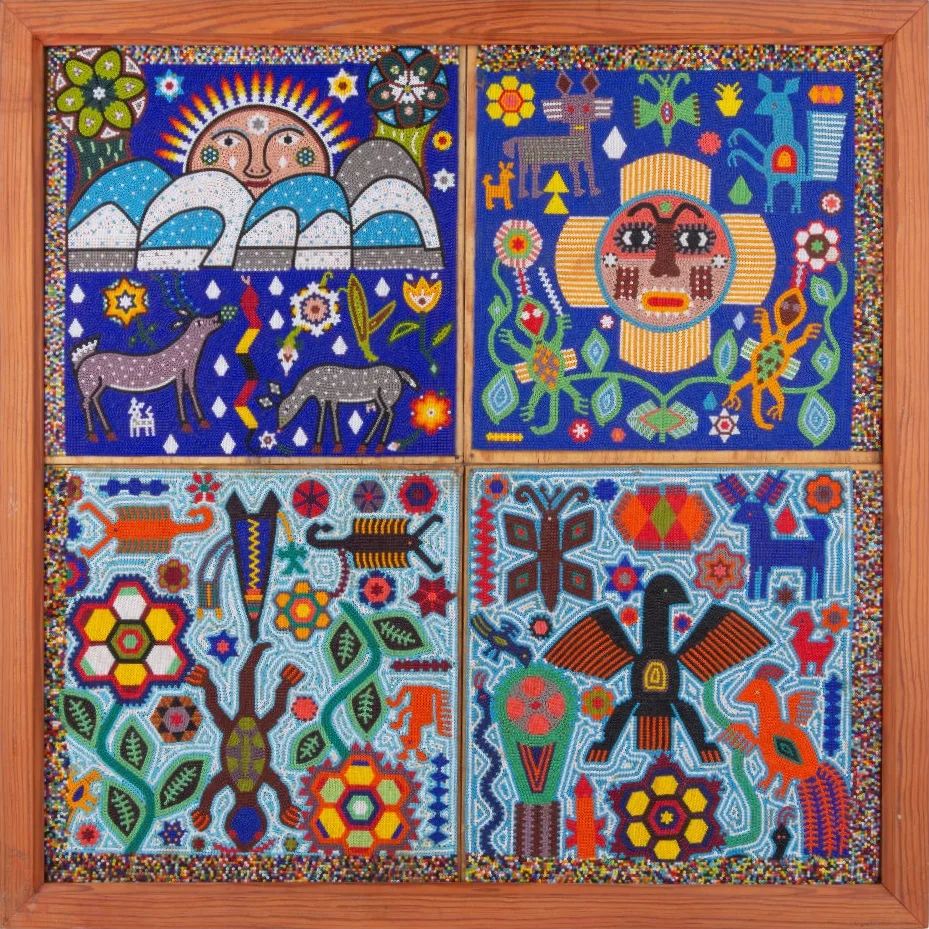
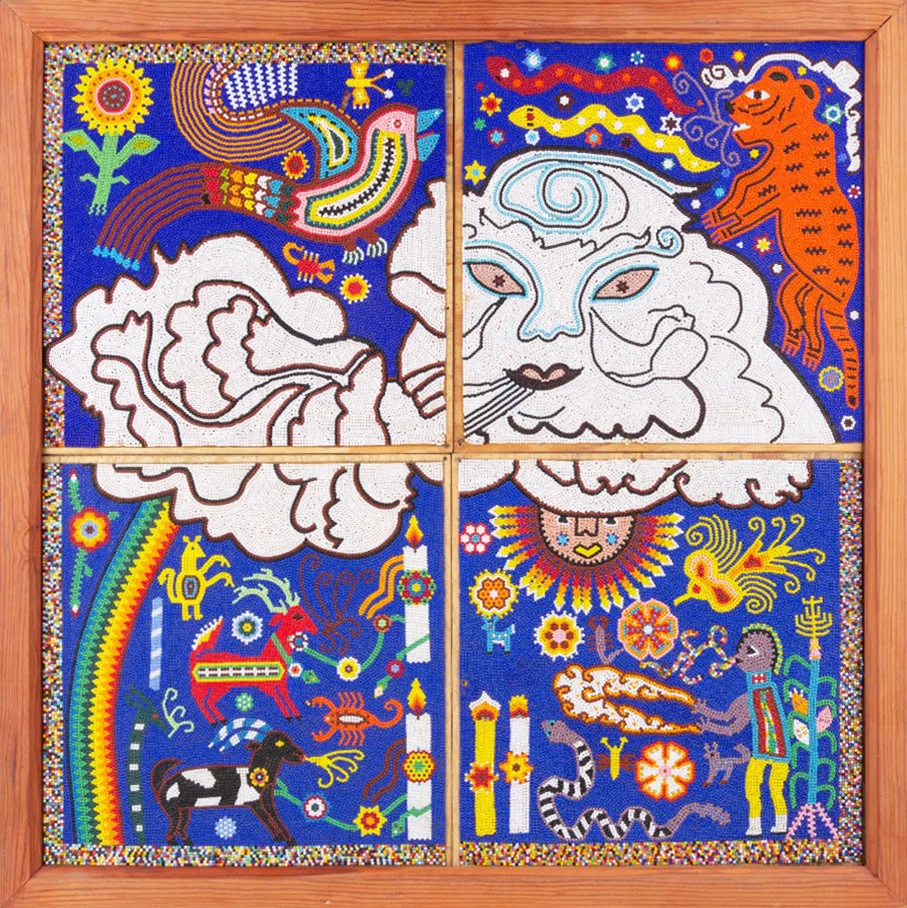
Santos Motoapohua de la Torre (b. 1942) is a Wixárika (Huichol) artist who lives and works in his native community of Santa Catarina Cuexcomatitlán, in the Sierra Madre of Jalisco. His Wixárika name, Motoapohua, translates as “echo of the mountain.” He began at twenty-three, in the 1960s, working in yarn, and over six decades has depicted the gods, or deified ancestors, of his community, a privilege granted to him by its ma’arakate, the shamans. His works are beads set in beeswax on plywood. The deer, eagles, serpents and stars that recur in them are manifestations of the gods.
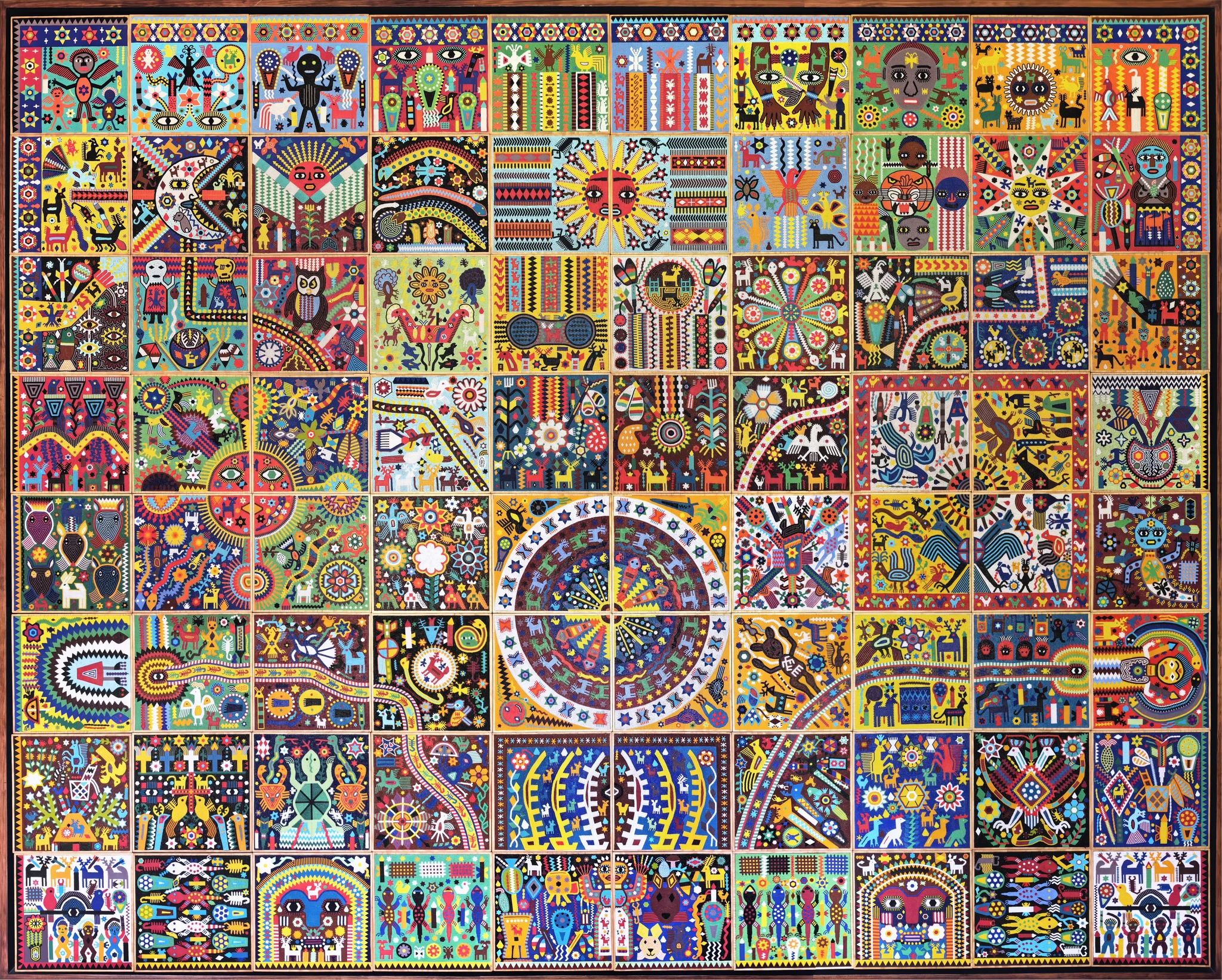
His large bead murals began with Sonido de músico, a work in one hundred panels. The murals are built from separate panels fitted together like a puzzle, and he has made them with his family and other artisans. In 1993 Mexico’s Fondo Nacional para la Cultura y las Artes funded Misterio y viaje de los tres espíritus sagrados. Writing about it in La Jornada in 1996, the art historian Jorge Alberto Manrique called it “una especie de joya magnífica” (a kind of magnificent jewel).
Outside Mexico he is perhaps best known for Pensamiento y alma huichol, Mexico’s gift to France, installed in the Palais Royal–Musée du Louvre station of the Paris Métro in 1997. He was not invited to its inauguration. Murals for the Museo Zacatecano in Zacatecas (Visión de un mundo místico, 2000–01) and the National Museum of Mexican Art in Chicago (El nuevo amanecer, 2003) followed. Nicolás Echevarría’s documentary Eco de la montaña (Echo of the Mountain), which premiered in 2014, records the making of a new mural and his family’s pilgrimage to Wirikuta. It won prizes at the Guadalajara International Film Festival.
In November 2019 October Gallery in London included his work in the group exhibition Portal II: Inside the Cordillera. In December 2023 the Universidad Autónoma Metropolitana opened Nube divina, which its organizer, James Ramey, described as the first retrospective of a contemporary Wixárika artist. Its centerpiece, La luz del mundo. Dos divinidades, a mural of three by 2.4 meters holding more than two million beads, was acquired by the university in May 2024 and placed on permanent display. “Mi trabajo canta, mi trabajo llora, mi trabajo habla” (my work sings, my work weeps, my work speaks), he said then.
Market: no auction record found