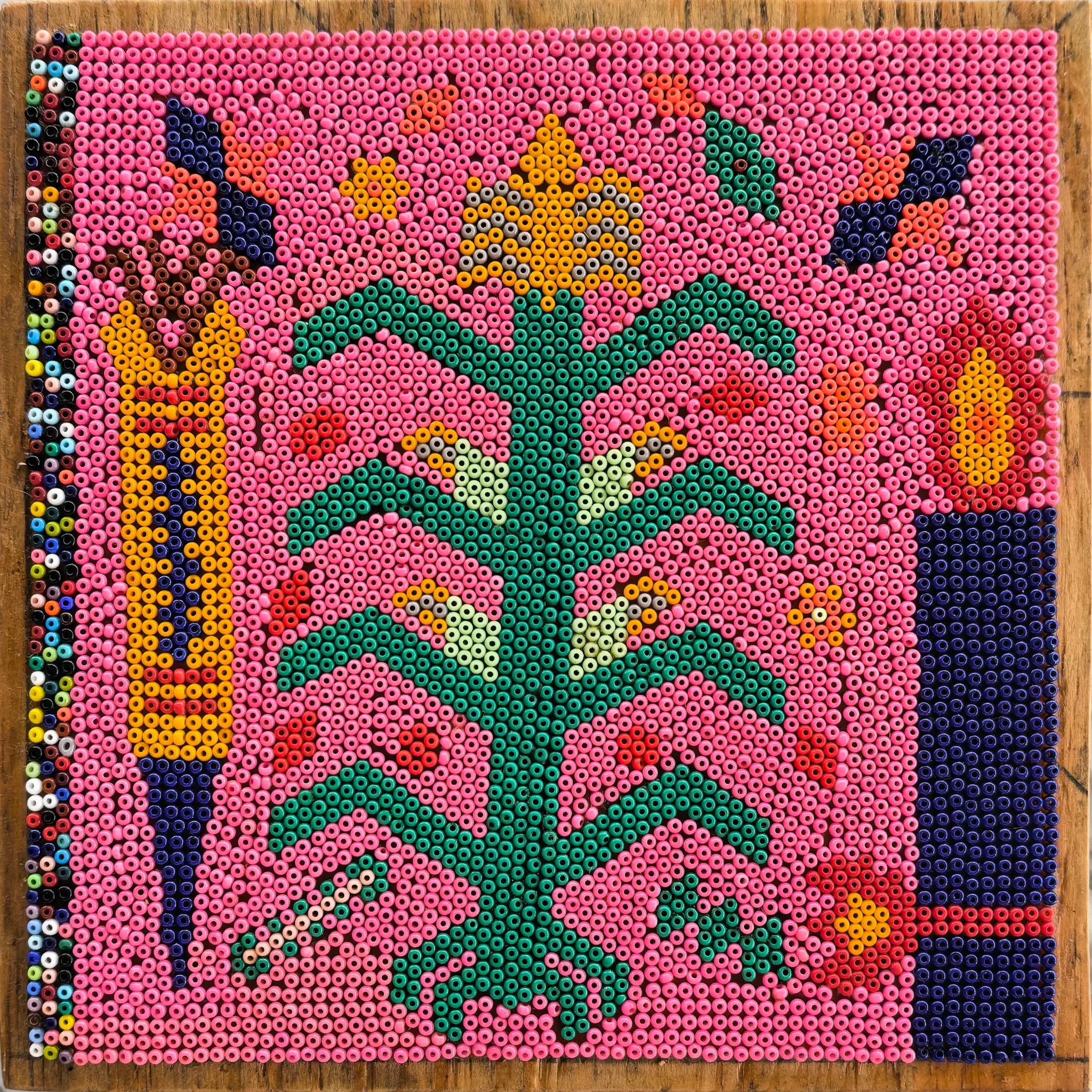
Bendición de la cosecha
Santos Motoapohua de la Torre (1942–)
Beads, beeswax and plywood · 15 × 15 cm
The back is inscribed and signed: "Vendicion de la cosecha hecho por Santos M. de la Torre de Santiago y familia" (Blessing of the harvest, made by Santos M. de la Torre de Santiago and family).
The piece shows a maize plant, a candle and a feathered arrow. Héctor M. Medina Miranda, of the Universidad Autónoma de San Luis Potosí, recorded Catarino Carrillo, of the Wixárika community of Bancos de Calítique in Durango, telling of the five daughters of the maize mother, Uteanaka, who were maize of different colors and also squash, beans and amaranth: "ellas eran maíz, eran gente" (they were maize, they were people). Medina writes that each stage of the plant's growth is given "una personalidad particular" (a personality of its own).
In its guide to the Wixárika Route, Mexico's Instituto Nacional de Antropología e Historia writes that candles "representan la luz del Sol y la conexión con las deidades" (represent the light of the Sun and the connection with the deities) and are lit as offerings at the sacred sites.
In Los Wixaritari, a 2021 book by Luz María Chapela that Mexico's Instituto Nacional de los Pueblos Indígenas published for Wixárika children and wrote in their voice, the Wixaritari say of their ceremonial arrows: "Con ellas nos comunicamos con nuestros dioses" (With them we communicate with our gods). In Juan Ríos Martínez's 1973 yarn painting Wirikuta I, explained by Juan Negrín, founding director of the Wixárika Research Center, the maize and the arrow are blessed with the blood of the Blue Deer: "Thus the corn was made more fertile, the arrow was turned into a conveyor of messages".